FONG + KEVIN
While We’re All Still Here
While We’re All Still Here
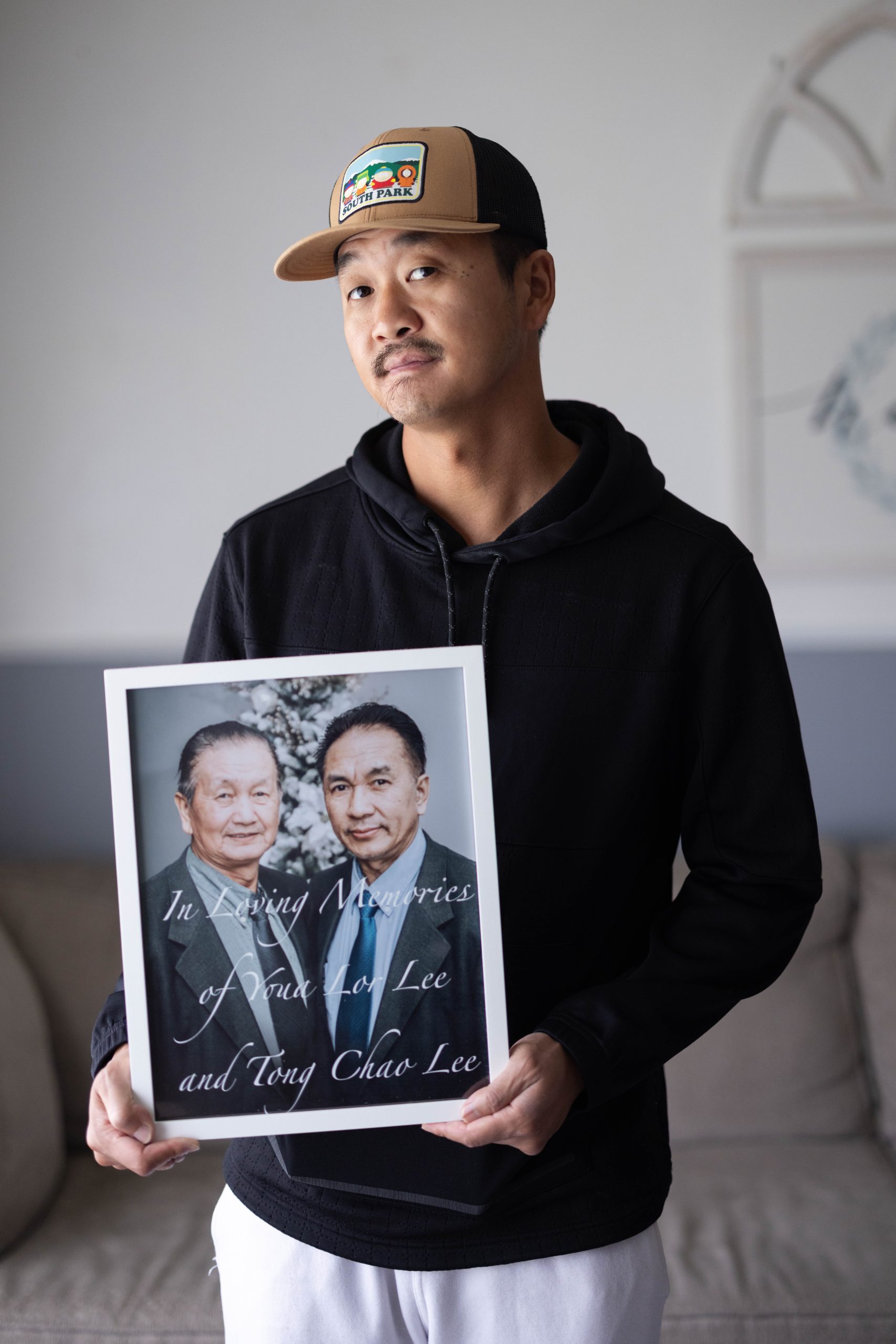
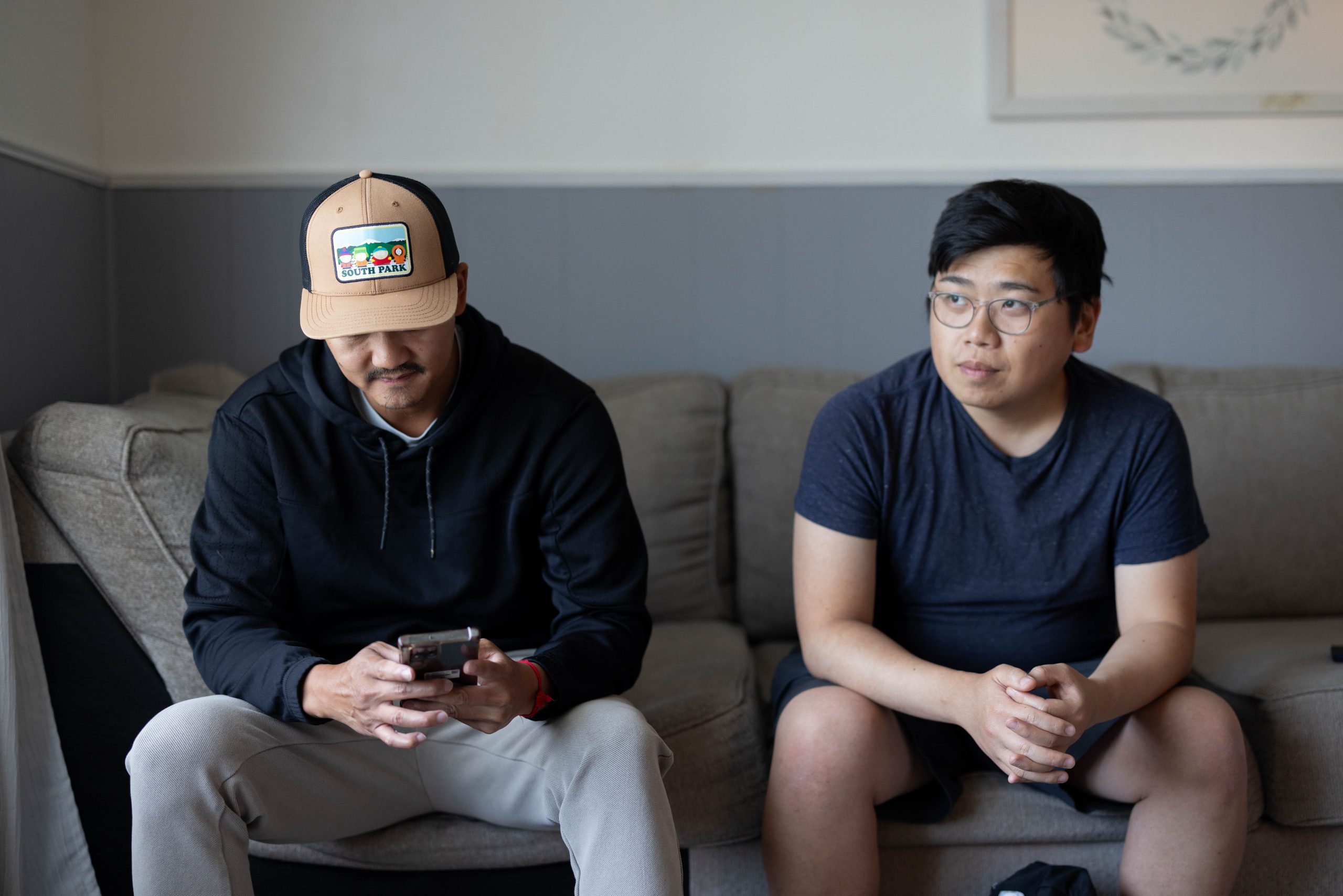
After 18 years of incarceration, multimedia artist, poet, and restorative justice practitioner Fong Lee returned home. Partnered with poet and documentary filmmaker Kevin Yang, the two artists explore what it means to build intimacy after prolonged separation.
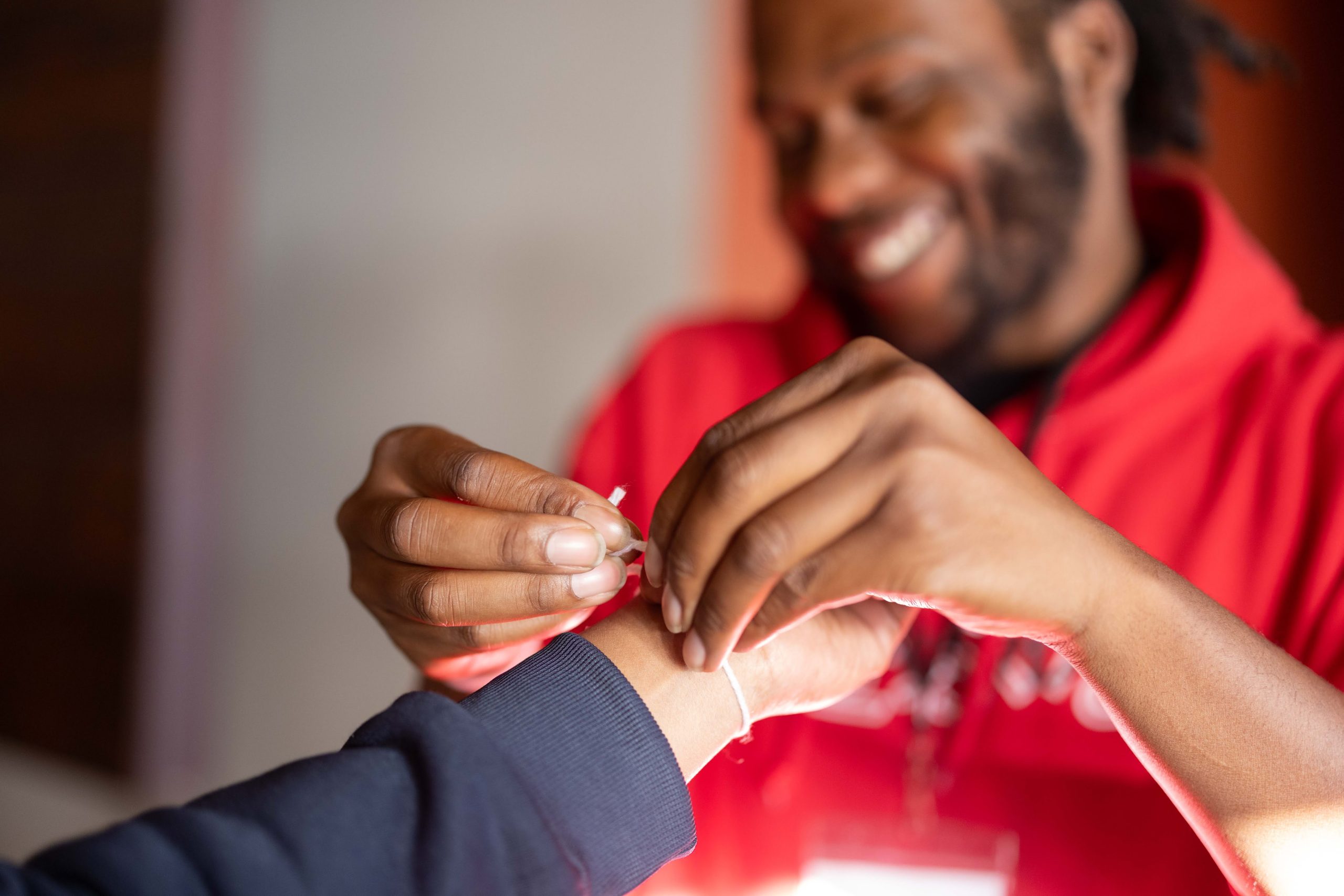
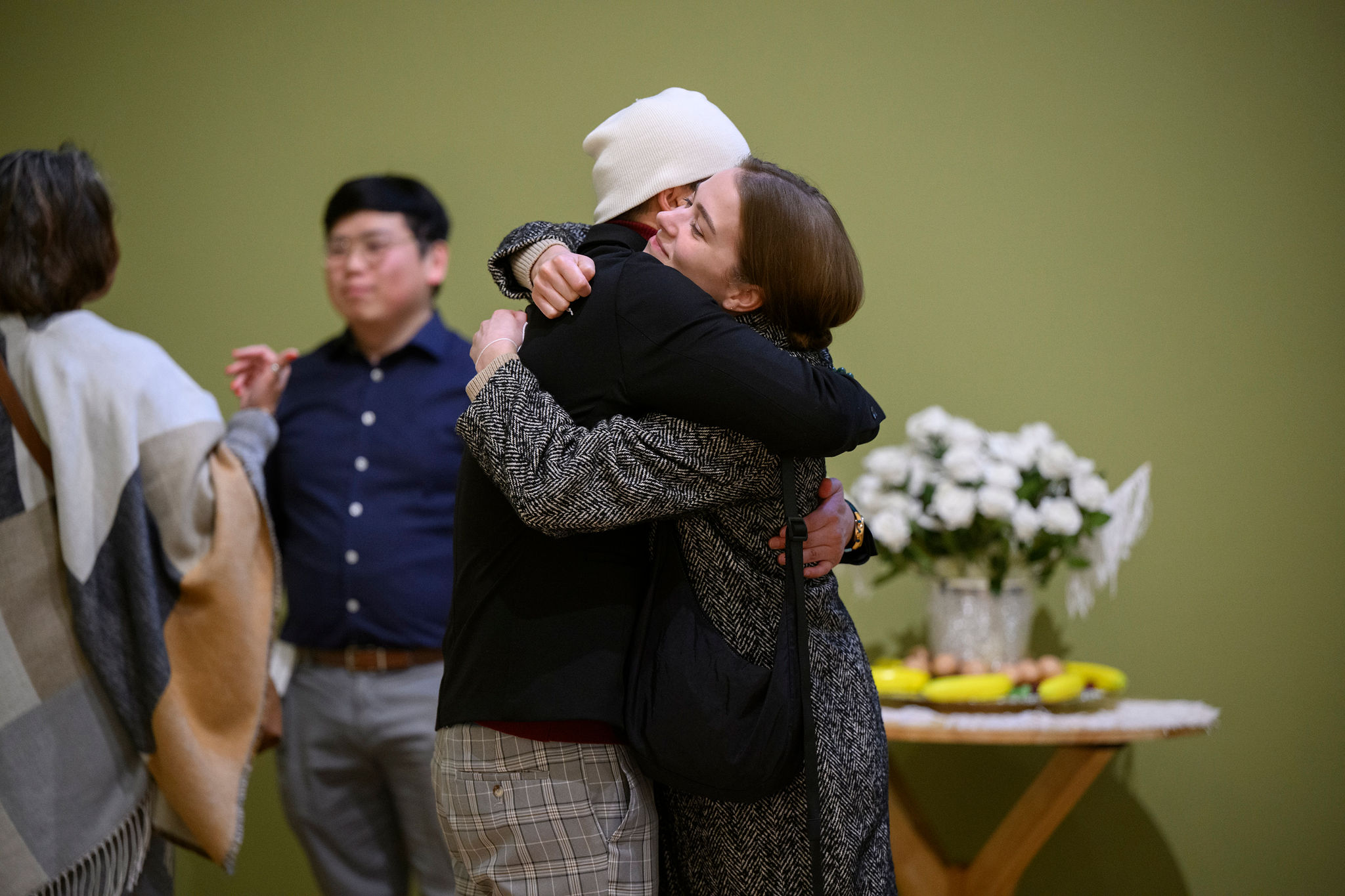
Fong and Kevin, who are both Hmong, drew inspiration from their culture’s khi tes ceremony. The artists invite visitors to tie the white strings, symbolic of connectedness, renewal and blessing, to another’s wrist while expressing well wishes. The other person may be a stranger or someone long known; Fong and Kevin hope that this small act can “be a foundation for a world where people can better care for each other.”
Paired with this non-traditional khi tes gesture are a video of Fong driving and a poem he wrote, also entitled While We’re All Still Here. While the former is a literal expression of Fong’s freedom, the latter acts as a remembrance of those family members who passed during Fong’s incarceration, including his father, uncle, and grandmother.
ABOUT SEEN @ WAM
SEEN is a WAAC exhibition featuring currently incarcerated artists, activists, and students in collaboration with artists, activists, and academics in the Twin Cities community who together explore issues of incarceration, isolation, healing, and coming home.
Representing a range of cultural, personal, and professional backgrounds and diverse forms of artistic expression, people on the “inside” partnered with people on the “outside” on the basis of creative curiosities and personal affinities. This exhibition is laid out across two galleries that evoke the “inside,” carceral (east) and “outside,” healing and community (west) experiences.
The seven-installation exhibit works to stretch the bounds of the museum as a site for community engagement and critical examination of American carceral institutions.
Teams have worked together to better understand and explore carceral isolation and trauma and the many ways it has caused generational harm in their own bodies and those of their descendants. To bring healing to the cycle of harm, they connect their families, the community, and even themselves, through this exhibition thoughtfully curated with cacophony and quiet, isolation and community, criticism and celebration.
Artists Fong Lee and Kevin Yang talk about their installation, While We’re All Still Here, within SEEN @ the Weisman Art Museum.
Film by Emily Baxter and Kevin Yang, score by Shu Lor, animation by Emily Christensen. Additional assistance by Fong Lee and Louise Waakaa’igan. Still photography by Emily Baxter of WAAC; opening day photography by Jayme Hallbritter for the Weisman. Additional video excerpts from While We’re All Still Here and Khi Tes Tutorial, by Kevin Yang and Fong Lee.
This activity is made possible by the voters of Minnesota through a grant from the Minnesota State Arts Board, thanks to a legislative appropriation from the arts and cultural heritage fund.

Opening Day photos by Jayme Halbritter


Meet the Artists

Fong
Fong Lee is a Saint-Paul-based artist and WAAC’s first Storytelling Fellow. Fong spent nearly 18 years inside Minnesota State prisons; he is a celebrated poet, with publications through the Minnesota Prison Writing Workshop and Asian American Writers Workshop, a beloved painter, and a published photographer. Fong is a restorative justice practitioner and the community engagement and partnership coordinator with The Legal Revolution.
Fong and his family immigrated to the US as Hmong refugees when Fong was a child, after his family was displaced from their home in Laos. His experience and expertise with incarceration and displacement enable him to make WAAC all the more dynamic, including strengthening the collaborations between inside and outside artistic partners.

Kevin
Kevin Yang is a writer, performer, organizer, filmmaker. “At my core, I am a storyteller. My hunger to tell and receive stories sits at the center of each of my disciplines. As a young Hmong American born and raised in the United States, I have a deep conceptual interest for in-between spaces; between ethnicities, between generations, between experiences. Similarly, I find great influence from artists who approach this subject matter, like Bao Phi, Jhumpa Lahiri, and Kao Kalia Yang. I also find great influence in the communities generate the conversations that allow this subject matter to exist. I am influenced by my parents and elders, as much as I am by my baby brothers and the youth I work with, not only in what stories they tell, but how they choose to tell them. Accessibility is a value I hold dearly in my art, especially as I attempt to create art that can exist and thrive inside of these in-between spaces. I am always eager to find ways to transcend or even flip barriers, like language or technology, in order to generate thought, conversation, and action between communities. For me, art should always be rooted in the community, and if the community cannot receive or understand my art, then I have to find a way to change it. On the flip side, I hope my art is not always easily digested; I hope it encourages growth and discomfort and deep thought as needed, but I need to know that my community understands that. I also love to play with my art. Joy, giddyness, and laughter are important parts of my character and are all things I try to uncover in my stories.”
Photos by Emily Baxter