
Saturdays were bacon and eggs and barbecues. Sundays were church after breakfast, fries and fish sticks at noon. Weekends with family were defined by food—even if pops wasn’t such a good cook.
Everything was fine until it wasn’t. Until the day pops went to work and didn’t come back.
I was eight when the breakfasts stopped. Dad went to jail, then prison. Moms would take us kids to visit him on the weekends. In nail, pops was on one side of the scuffed-up plexiglass, and we were on the other. We’d pick up the phone to hear his voice, even though he was just a few feet away. Those were some of the worst times, being so close and so far.
After a while, dad was transferred to prison. In some ways it was easier: we could finally hug him, play chess or checkers, take a picture together. But going through security to see someone you love? No kid wants to go through that. Might as well say I was the one in prison. All of us were.
Seeing pops there for just a few hours hurt so bad I couldn’t stop crying. Sometimes the pain would sit in my throat like a rock, sometimes it would fix itself around my heart like a fist, sometimes it would rush through my body, taking me with it, so that I was left hollow and alone.
Still, dad tried. He would use those visits to put some fear into you. The way he talked to you, the way he looked at you. Going to school? Doing homework? Even though he was behind bars, he wanted us to do it right.
But I was still struggling. I didn’t have friends: I had associates—people I’d see in school and not after. At that point, I was my own best friend.
I was snappin’ out—out of frustration, anger, and emptiness. It’s all these question marks—When can I talk to him? When can I see him? When is he coming home?
I would have given anything for a plate of pops’ eggs. I would have eaten breakfast for every meal for ten years if it meant being able to sit across the table from my dad while I ate it.
I’d lash out—we all did. I’d lash out so that someone would be there to comfort me for the next couple of days.
And there were people there. I had an incredible support system: my grandma, my grandfather, uncle, sisters, and brother—even the neighbors were there for us.
Moms was the greatest support of all. I truly believe she’s made of steel. She kept us in check, with dinner every night and homework complete. But you can’t always talk to your mom about everything, and there was some stuff that was so hard to talk about.
L from Monroe was there too. He used to pick me up and take me to school, come chasing after me if I’d run out, and give me the strength and space to write letters to my dad.
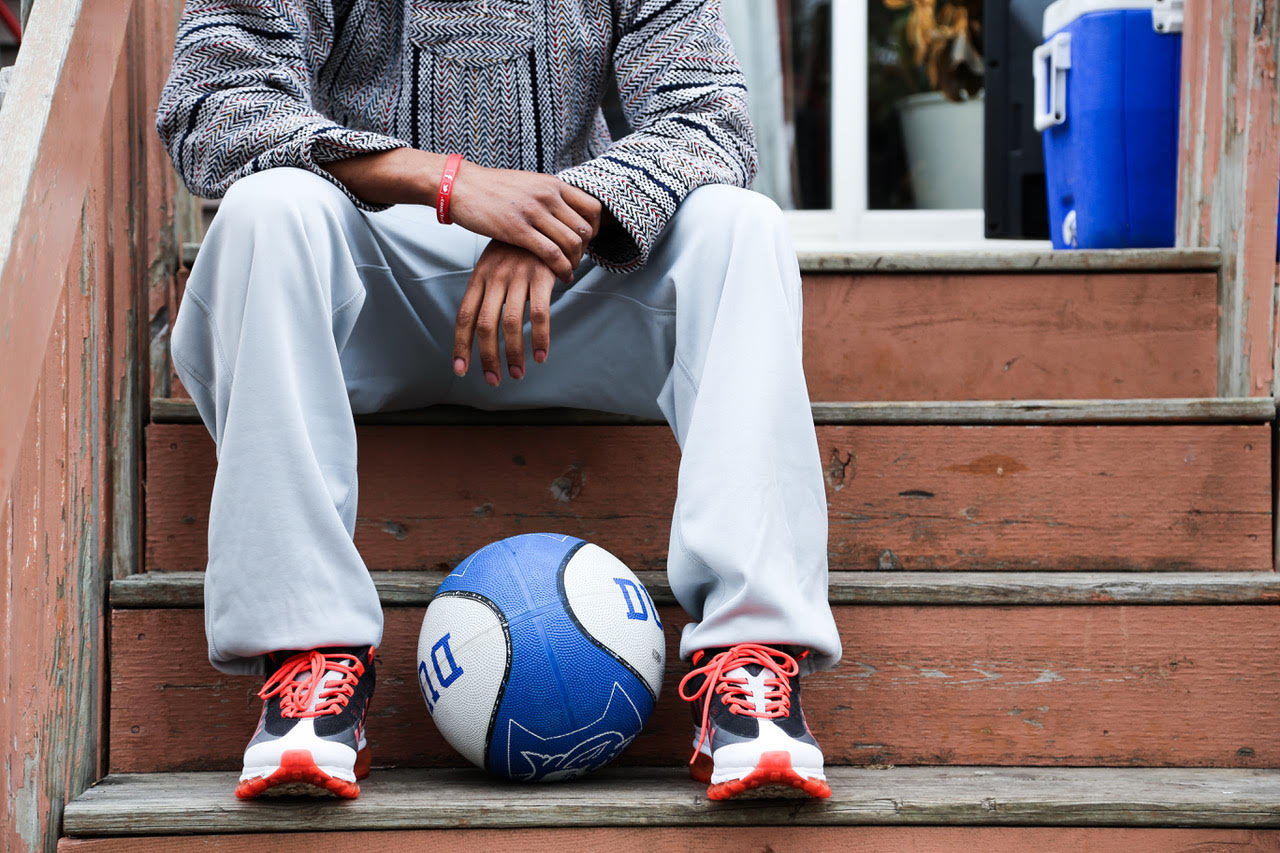
L encouraged me and my brother to focus our energy on sports—basketball, football, biking. He knew we had to keep moving to stay stable.
I’m in my twenties now, and like L, I want to help kids who are going through what I went through—so that they don’t have to go through ALL of what I went through.
Dad’s home now. I’m a momma’s boy, so I’m home too. Saturday mornings, pops and I hang out in the kitchen, where I’m finally able to ask him those questions:
What was it like when you were in prison? Why were you gone so much? What did you do?
The only difference is that now I make the breakfast. (I’m a much better cook.)