
WHAT WE DO
We Are All Criminals catalyzes conversations about crime, punishment, second chances, and what justice truly looks like.
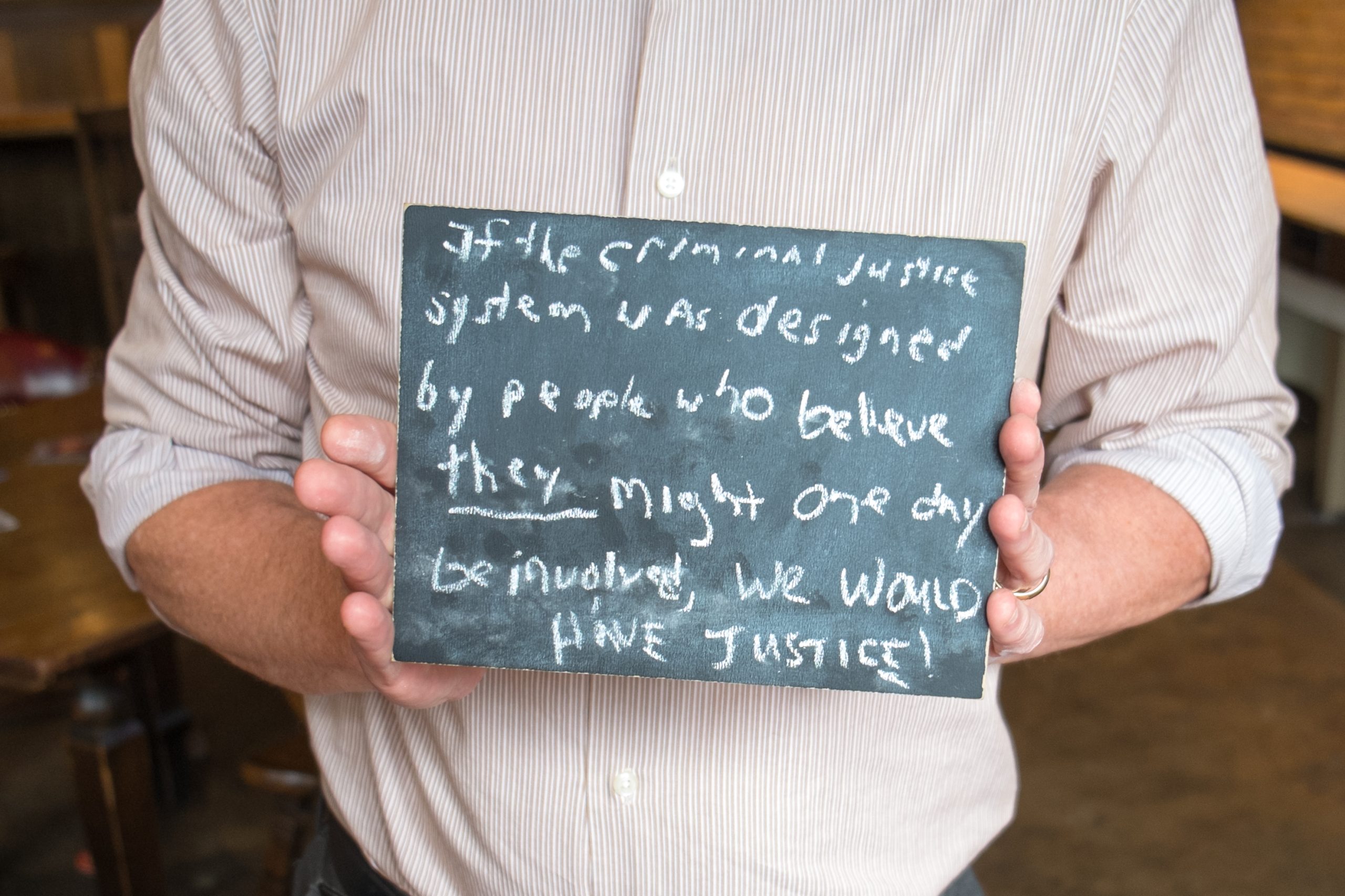
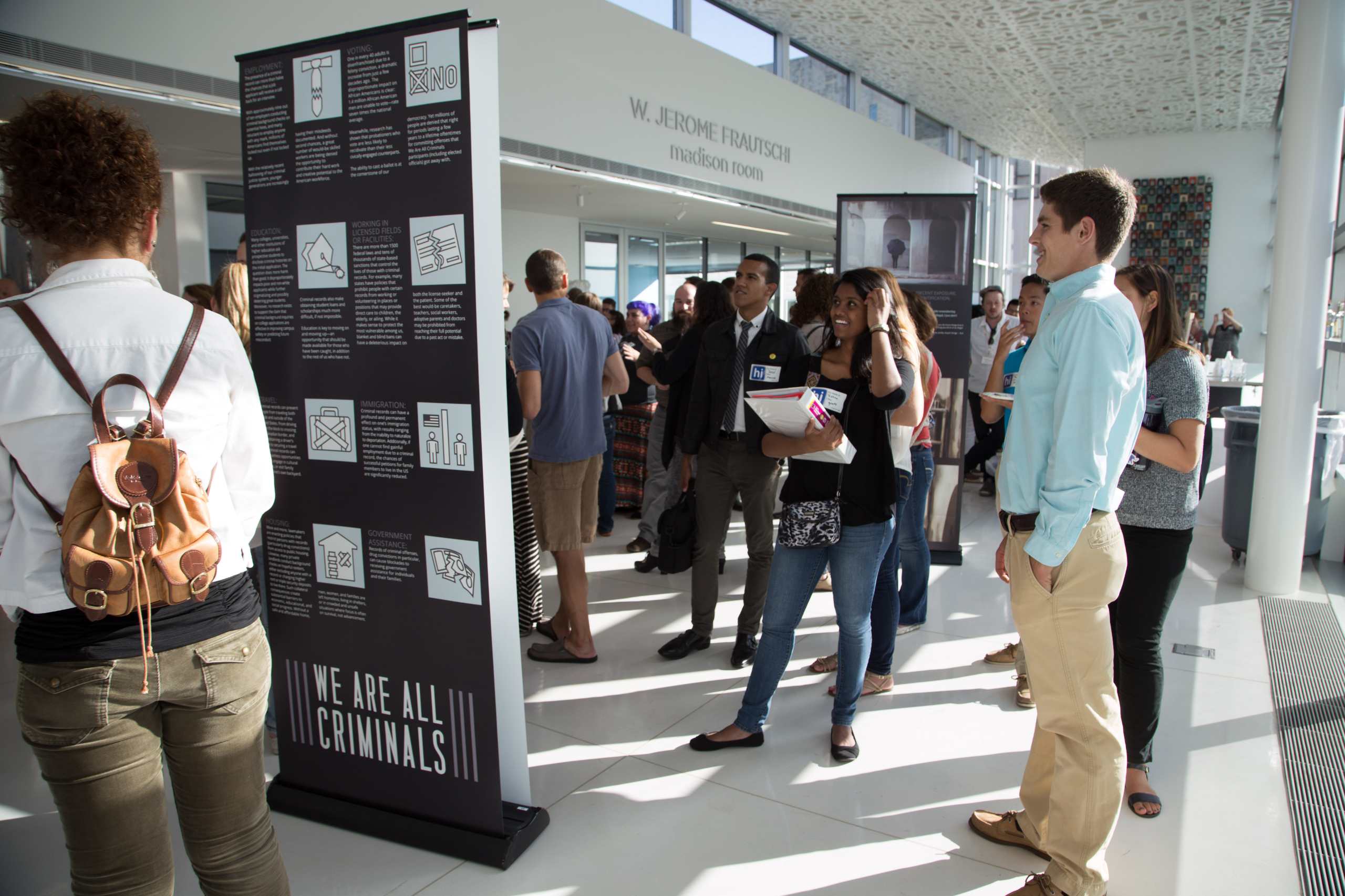
We Are All Criminals combines criminal justice statistics and statutes with compelling photographs and first-person narrative to demonstrate the destruction caused by decades of mass criminalization.
We exist at the intersection of art and advocacy, and serve as a catalyst for conversations about race, class, privilege, punishment, and mercy.
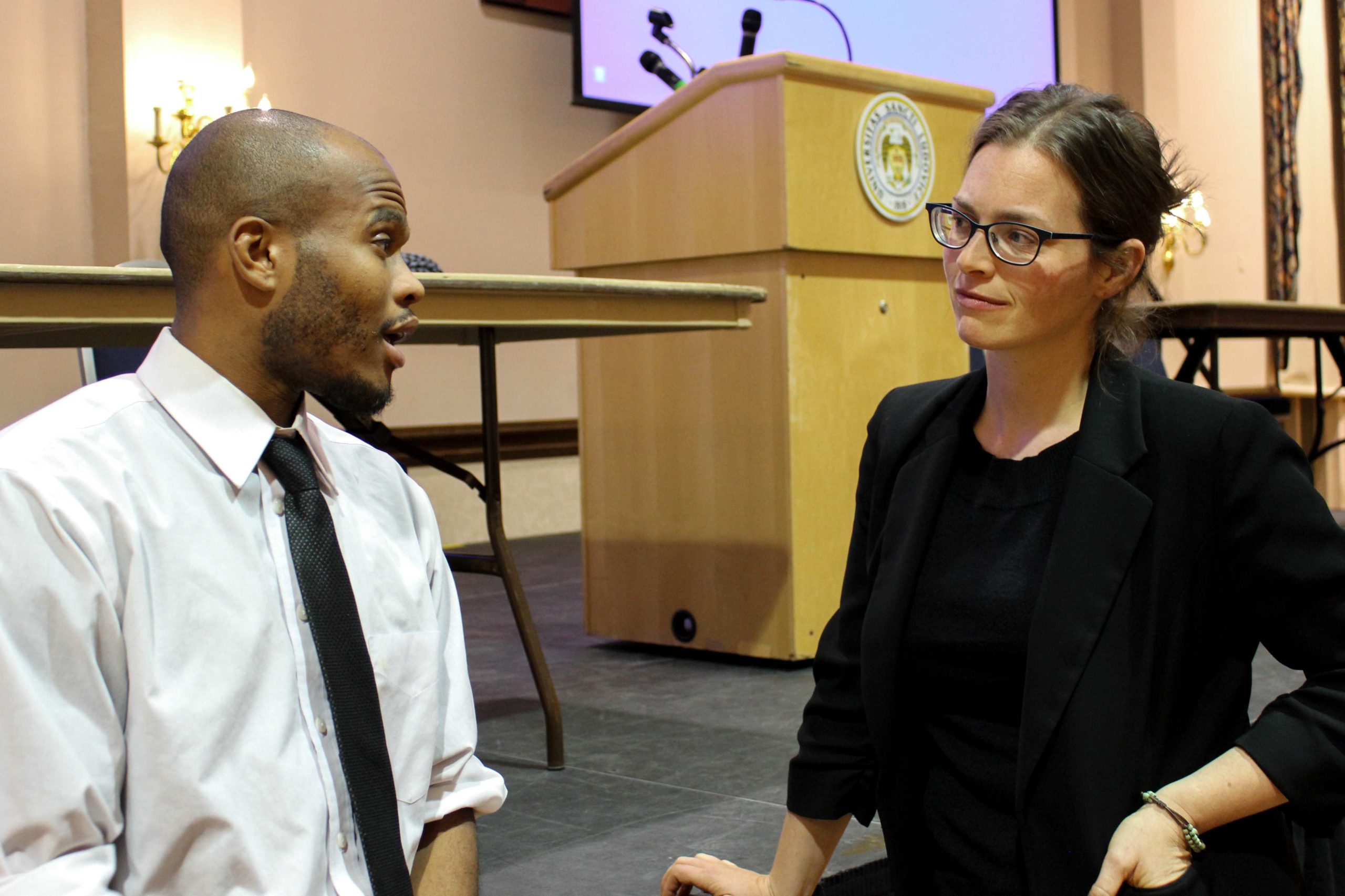
We Get Around
We’ve presented WAAC to audiences big and small across the United States. From convention center stages to picnic tables in the park, we’ve been sharing our work and our urgent calls for change for more than a decade.
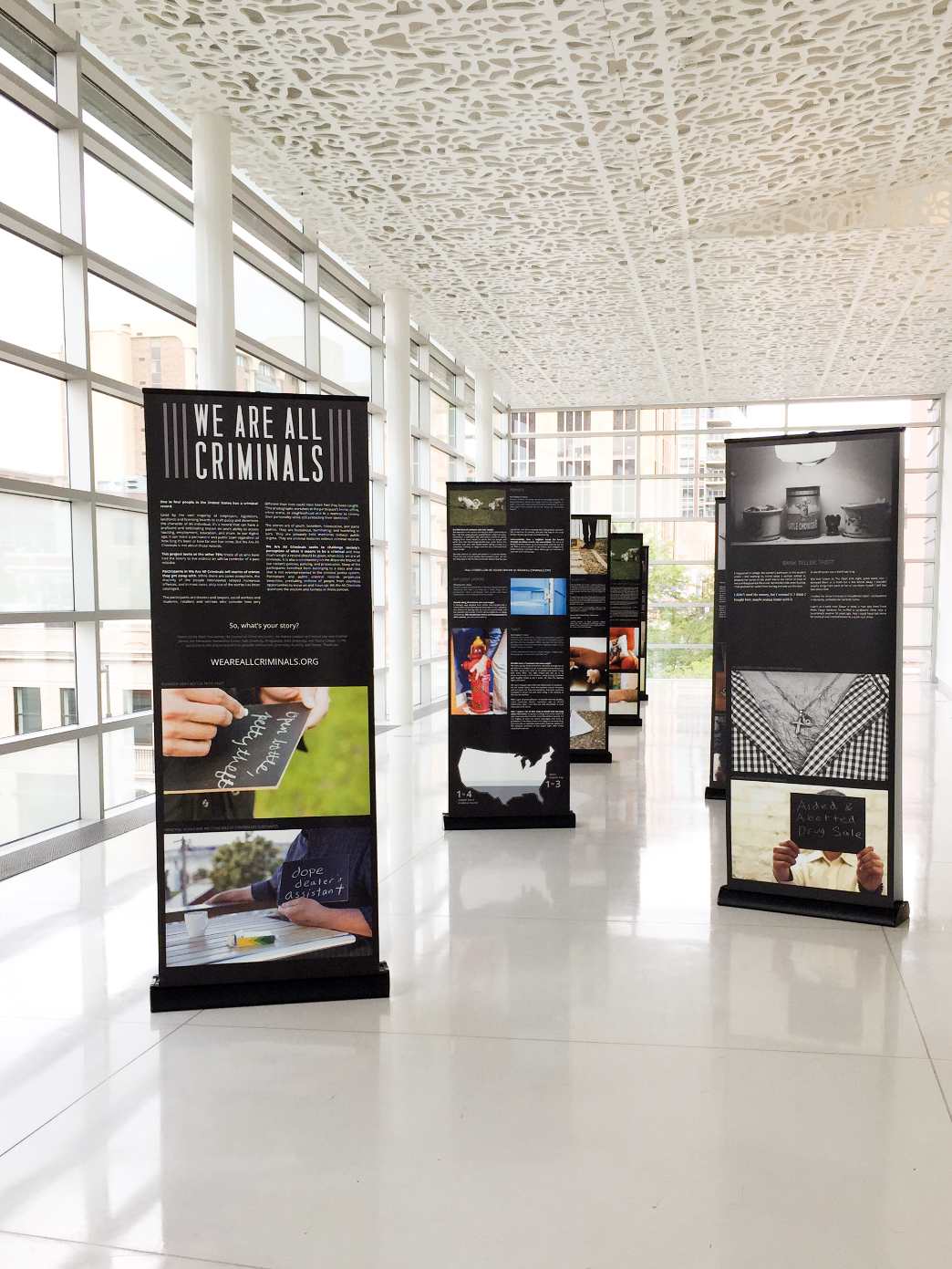
Often accompanying our presentation, WAAC exhibits have been in museums and galleries, colleges and universities, parks and places of worship, state capital rotundas, and organizers’ basements and rooftops from coast to coast.
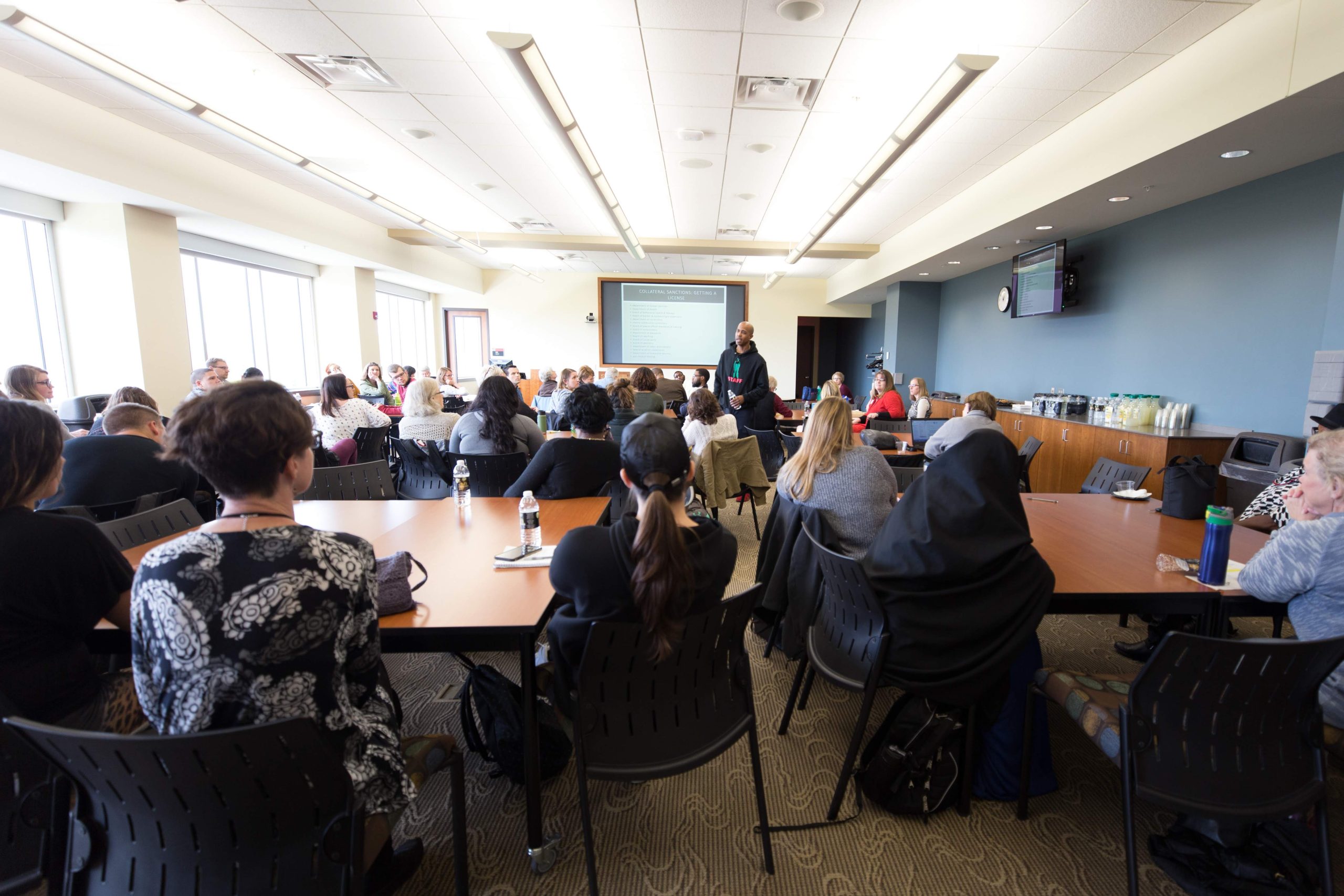
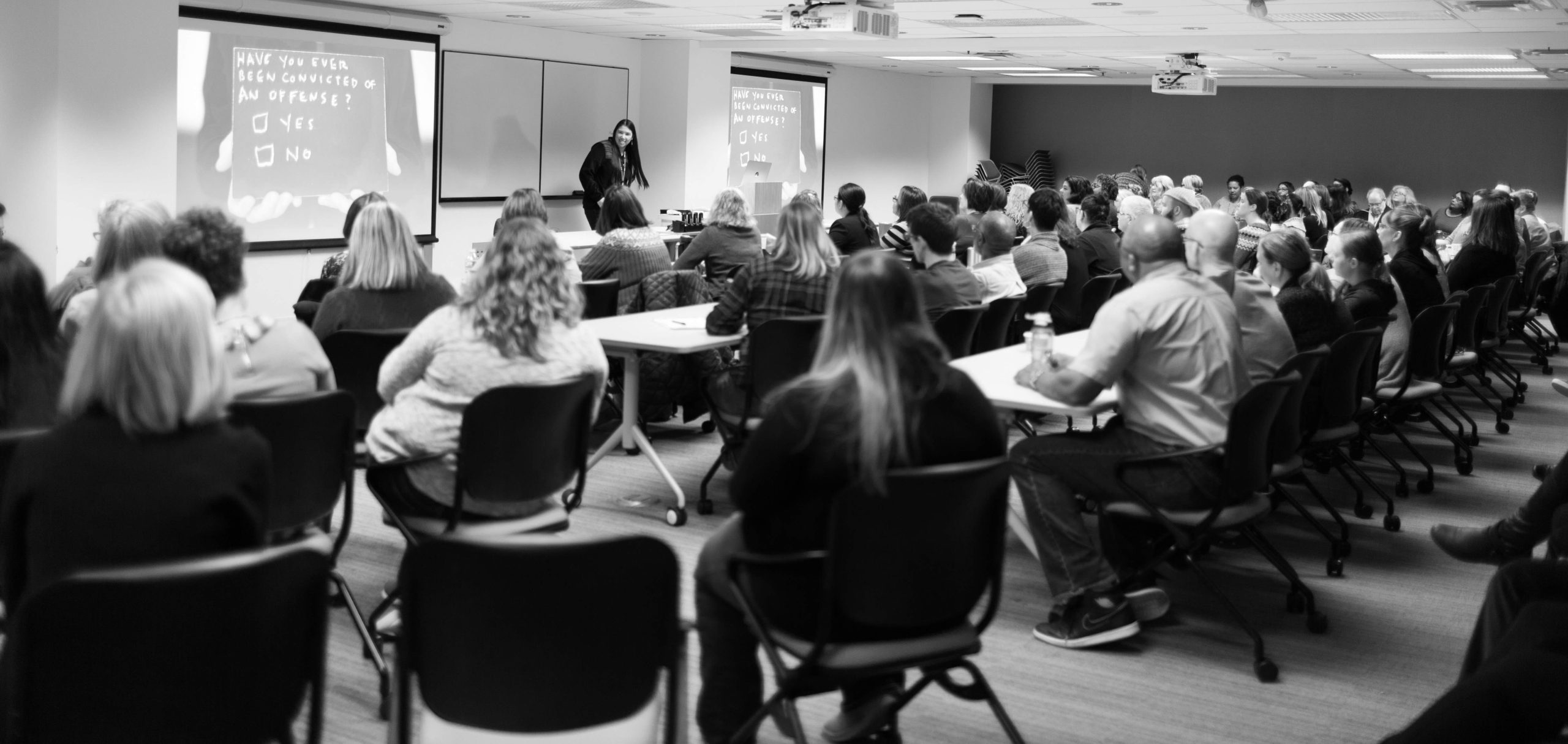
Invite us to your college, city, or organization.
igniting a conversation starts here
I just realized that I wouldn’t be eligible to work in my own company, had I been caught.
You have inspired me to question what I thought I understood.
I challenge you to think and act instead of ignore. If the injustice of it all doesn’t make you want to take action, remember that by some twist of fate, it could be you behind bars one day, the mark of ‘criminal’ on your record for the rest of your life.
We’re removed here – it’s easy to pretend that what happens off campus has nothing to do with us.
This is a wake up call. A reminder of our privilege – and a call to do something with it.
Facts don’t change people’s minds: stories do.
WAAC demonstrates that when we use stories to erase the space between ourselves and others, we stop seeing them as others and start treating everyone like we believe we deserve to be treated.
I never imagined a website like this would have such an impact on my life, but I have come to realize the common humanity among all of us, no matter what a person’s record says.
WAAC is one of those works that can help change the national conversation on criminal justice reform.
The greatest obstacle to significant criminal justice reform is insufficient empathy for those in our prisons and jails and otherwise impacted by the carceral state…WAAC helps us appreciate that we have linked fates and common futures.
Our children are not criminals.
Oddly, it takes something called “We Are All Criminals” for people to see that.
Your presentation was life-changing for me — connected all these dots into a bigger systemic picture that made for such a compelling message about humanity and justice and morality and action.
Thank you for what you do.
It matters. Big time.
Art challenges. Art questions. Art reaches within.
Within our hearts and minds and, importantly, our pasts.
That’s what WAAC does: it challenges, it questions, and it turns us inside out.
I work in law enforcement.
My sister sent me WAAC as a “reminder.”
She was right.
I heard about We Are All Criminals on WBAI in New York this morning on my way home from work.
I want you to know this project has single-handedly restored my faith in humanity.
The project’s ability to go beyond the statistics resonated with Madison attorney Shobhan Thakkar,
We Are All Criminals “made us all think about what we’ve done and how lucky we have all been compared to the unfortunate ones and what happened to them,” he said.
“It makes you think about how life could be very different.”
As a state university, we should be creating the conditions for all of New York’s citizens to attend college.
We recognize that ‘we are all criminals’—many of us have made mistakes and have been given a second chance.
We want that chance to be extended to people with a criminal conviction.
The documentary project We Are All Criminals is a compelling demonstration of the unfairness of racial disparity in the system.
In the college admissions context, the We Are All Criminals project and the data about criminal behavior among college-aged people provoke the question:
Is it the bad fortune of getting caught and having a criminal conviction that makes one potentially unfit, necessitating heightened scrutiny, or is it the “criminal behavior?”
“The more I look at your TERRIFIC project with my sociological eye (and hopefully some small bit of creativity), the more I become fascinated with the possibilities it holds for our understanding of crime, punishment, and moral panics.”
“When I first saw We Are All Criminals, honestly, I felt quite defensive. But after learning more about the project, I started processing the information and am still thinking about it. I’ve thought about what my own story might be, and it’s changed the way I view criminality”
“I just realized that I wouldn’t be eligible to work in my own company, had I been caught.”
I wish more people knew about this project. Yes, my son made mistakes—I have too.
But what’s he going to do when he gets out? What if I’m no longer around to help? What if there is no home for him to return to?
I’ve been in the county attorney’s office for more than two decades,
And I’ve never thought about it like this.
The We Are All Criminals photographs are art of the highest order.
Those of us that have been working for criminal justice reform have come to understand one very important thing: the power of art to change people’s minds.
In some ways, it may be the only thing that does.
I just wanted to let you know that I ended up giving a guy a second chance.
He’s by far my best hire.
(It took WAAC to help me remember that the stuff he got caught for paled in comparison to what my friends and I did.)
I wish more people knew about this project. Yes, my son made mistakes—I have too.
But what’s he going to do when he gets out? What if I’m no longer around to help? What if there is no home for him to return to?
I’ve been in the county attorney’s office for more than two decades,
And I’ve never thought about it like this.